Co-Packer Review for Beverage Brand Founders

A co-packer review is one of the highest-stakes steps between a promising beverage idea and a product that can reliably reach retail shelves. The wrong manufacturing partner can create expensive delays, inconsistent quality, or production requirements that do not fit your business. The right partner gives your brand a realistic path from finalized formula to commercial production.
For first-time founders, the challenge is that co-packers often look similar from the outside. Many can fill cans or bottles. Far fewer are equipped to run your specific beverage, at your needed volume, with the processing method, ingredient handling, packaging format, and quality controls the product requires. A good review process looks beyond capacity and price.
Start Your Co-Packer Review With Product Fit
Before comparing manufacturers, get clear on what your beverage actually needs. A co-packer cannot give a reliable production answer when the formula, package, or process is still undefined. You do not need every detail complete before starting conversations, but you do need enough direction to avoid evaluating facilities against assumptions.
Document the basics: your product category, target package, carbonation level if applicable, anticipated shelf life, ingredient list, sweetener system, functional ingredients, intended claims, and projected first run. If you are working from a kitchen recipe, understand that it may need reformulation before it can be produced safely and consistently at commercial scale.
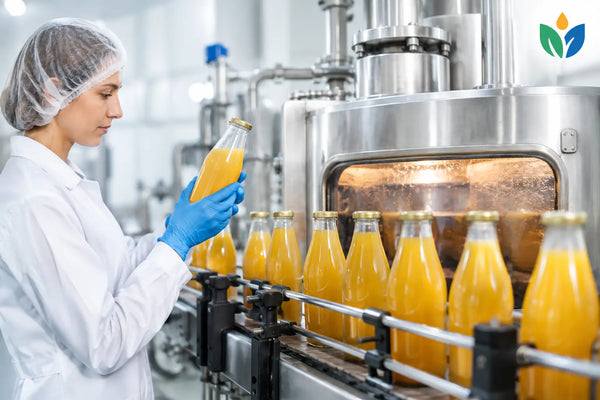
Processing compatibility matters more than many founders realize. A cold-filled refrigerated juice, a hot-fill tea, a tunnel-pasteurized carbonated beverage, and a shelf-stable functional drink may all require different equipment and controls. A co-packer that produces excellent sparkling water may not be the best fit for a protein beverage, a drink with botanicals that settle, or a formula containing heat-sensitive ingredients.
Ask direct questions about similar products they currently run or have run successfully. Similar does not mean identical, but it should include meaningful overlap in viscosity, acidity, carbonation, ingredients, package type, and processing needs. A manufacturer that understands your category can identify production risks early instead of discovering them on the line.
What to Evaluate Beyond the Quote
A quote is necessary, but it is not a co-packer review. Production pricing can appear attractive until minimums, freight, changeovers, testing, packaging losses, storage, ingredient markups, and required deposits are included. Ask for a clear explanation of what is and is not included so you can compare proposals on the same basis.
The following areas deserve close attention:
- Minimum order quantities and growth path: Confirm the initial production minimum, then ask what happens when your volume increases. A facility may be workable for a launch run but poorly suited to your next stage of growth.
- Equipment and packaging capability: Verify the exact can, bottle, closure, label, carton, and case-pack formats the facility can handle. Do not assume a line can run your preferred package because it runs a similar one.
- Quality and food safety systems: Ask about certifications, batch records, traceability, allergen controls, sanitation procedures, hold-and-release practices, and how deviations are handled.
- Ingredient sourcing and receiving: Determine whether you may source your own ingredients, whether the facility has approved vendors, and how it handles ingredients with long lead times or special storage requirements.
- Scheduling and communication: Understand typical lead times, how production dates are assigned, who manages your account, and how quickly the team responds when a problem needs a decision.
Verify Capacity Without Overbuying
Founders often face an uncomfortable trade-off: smaller co-packers may accept lower minimums, while larger facilities may offer better automation and unit economics at scale. Neither option is automatically better.
The practical question is whether the manufacturer can support the volume you can responsibly sell and finance now. Ordering far beyond demand ties up cash in inventory, storage, and product that may require reformulation after early customer feedback. On the other hand, choosing a facility with no path to higher volume can force a disruptive transition just as retail momentum builds.
Ask about line speed, available production windows, annual capacity, and whether your brand will be competing for time with larger customers. Then ask what the transition would look like if your product outgrows the facility. A candid answer is usually more valuable than an ambitious promise.
Review Formula Ownership and Production Control
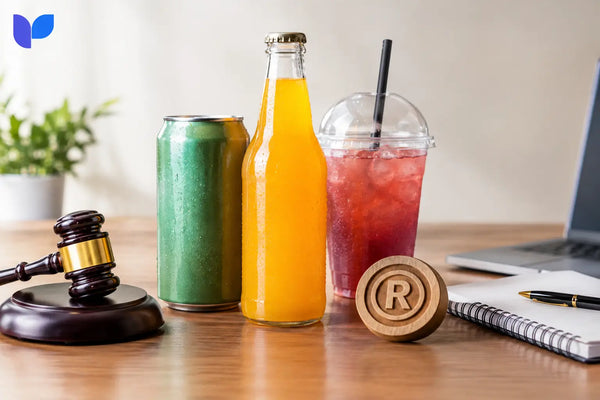
Your formula is a core business asset. Before sharing proprietary details or approving a manufacturing agreement, make sure ownership and confidentiality are clear in writing. You should understand who owns the formula, specifications, artwork, packaging files, test results, and any improvements made during scale-up.
Some manufacturers offer stock or private-label formulas that can speed up a launch. That approach can make sense for certain businesses, especially when differentiation is not the priority. But it is different from building a custom beverage that your company owns and can take to another qualified manufacturer if needed.
For a founder building long-term brand value, retaining ownership creates options. It allows you to change co-packers if service, capacity, location, or economics change. It also protects the work invested in your flavor direction, functional positioning, and product specifications.
Your production agreement should also define approval points. Clarify who signs off on raw materials, pilot samples, label versions, batch specifications, substitutions, production changes, and finished goods release. Small changes in an ingredient source or processing condition can alter flavor, color, stability, or nutrition facts. A clear approval process protects both the brand and the manufacturer.
Look for a Partner That Identifies Risks Early
The best co-packers do not simply say yes to every request. They ask useful questions. They point out when an ingredient may not disperse correctly, when a package may be incompatible with a process, or when a claimed shelf life has not been validated. That kind of pushback can save a founder from approving a product that performs well in a sample but fails during distribution.
Pay attention to how a potential partner handles uncertainty. Do they explain what needs testing? Do they distinguish between a likely outcome and a confirmed result? Can they outline the next technical or operational step without burying you in jargon?
This is especially important with functional beverages, products containing extracts or vitamins, dairy or plant proteins, unusual sweeteners, natural colors, and formulations with a narrow flavor tolerance. These products can be commercially viable, but they require thoughtful development, stability work, and process alignment before full-scale production.
Do Not Skip the Trial Run
A pilot or first production run is more than a formality. It is where commercial reality becomes visible. Review samples from the beginning, middle, and end of the run. Evaluate fill level, carbonation, flavor, appearance, coding, label application, pack-out, and product performance after it has had time to settle.
Build time into your launch plan for this stage. A first run may reveal opportunities to improve a specification, adjust a processing parameter, or refine packaging. Treating the run as a learning milestone, rather than a final exam, helps you make better decisions before committing to wider distribution.
Turn the Review Into a Confident Production Plan
A strong co-packer review ends with more than a preferred vendor. It should produce a workable production plan: an approved formula and specification, a defined package, confirmed ingredient and packaging lead times, an estimated budget, a quality plan, a production schedule, and clear ownership terms.
If those pieces are not yet in place, the answer is not necessarily to keep calling more facilities. It may be time to finish the commercialization work first. At Drink Labs, that can include custom formulation, ingredient sourcing, package and label development, and matching the finished product with manufacturing partners equipped to produce it.
Choose the co-packer that can make your drink consistently, communicate clearly, and support the business you are building - not simply the one that returns the fastest quote. A well-prepared product and a well-matched manufacturing relationship give your brand room to earn repeat purchases before you need to solve the next growth challenge.